

Excuse Me?
Summary for Leaders
Stop playing the blame game. Clear goals and calm talks can turn excuse-makers into problem-solvers.
How to Manage People Who Make Excuses
Do your employees always have an excuse?
"The printer broke."
"Traffic was bad."
"I did not get the email."
It is tiring to hear these stories. As a manager, you want results, not stories.
Most people do not even know they are making excuses. They really believe that things are out of their control. But you can help them change.
Here is how to stop the excuses and build a great team.
1. Stay Calm and Listen
When someone gives an excuse, do not get angry.
Lower your voice.
Speak slowly.
Ask open questions.
Ask them what went wrong. Listen to find the real problem. Sometimes they just need better training or more time.
2. Make Goals Clear
Ambiguity is the best friend of an excuse. If your team does not know exactly what you want, they will fail.
Set numbers. Give them a clear goal, like "finish 5 pages."
Set times. Tell them the exact hour the work is due.
Write it down. Send an email after you talk so everyone agrees.
3. Focus on What They Can Control
People make excuses when they feel helpless. Flip the script on them.
Ask: "What part of this job can you control?"
Ask: "How can we stop this problem next time?"
This forces the employee to think about solutions, not blame. It teaches them to take ownership.
4. Notice the Pattern
One excuse is a mistake. Five excuses is a pattern. If an employee is always late, call it out.
Say this: "I notice you missed the deadline three times this month." Do not let them dodge the truth. Show them the facts and ask them to fix it.
5. Lead by Example
Your team watches everything you do. If you make excuses, they will too.
Own your actions.
Apologize when you mess up.
Fix your own errors.
When they see you take responsibility, they will learn to do the same.

Delegate Like You Mean It
Leadership requires a host of skills: communication, empathy, visionary thinking, and emotional intelligence (just to name a few!). Delegation is a vital skill that successful leaders learn to master. Without a trained ability to delegate tasks and projects effectively, managers struggle with an imbalanced workload, lack of trust on the team, and difficulty motivating employees.
So, how does a leader learn to delegate?
Delegation is a skill. Some people are naturally comfortable with delegating while others struggle with the concept. You can flex your delegation muscles by starting with simple tasks, such as opening and sorting mail or emailing a weekly report to staff. Practicing these low-risk assignments helps you get comfortable with asking for help and support from the team. Then, you will feel more confident delegating more important work.
Delegation is an opportunity. Leaders who delegate create room for growth on their teams. In fact, delegation is the fastest and most efficient way to build self-sufficient teams that can function with little supervision. Employees may have untapped skills that become evident when they are given an opportunity to try something new or take on the responsibility of a particular task or project. Teams follow leaders who trust them and are willing to share ownership.
Delegation is not perfection. The most common reason leaders hesitate to delegate is the fear of losing control. Remember that delegation means you are creating space for new vision and opportunities for others to grow and learn. Delegation is not giving up control or even accountability for the outcomes. Start small and get comfortable with new and unique outcomes. The process will not be perfect and may not be the way you would do it, but let it unfold. Step in when asked or to course correct when needed.
Delegating tasks and projects offers many benefits to busy leaders. Taking routine items off your plate creates space for you to focus on greater opportunities that scale successful business practices. The process of delegating to team members increases collective respect and trust among the team. Individuals develop critical and strategic thinking skills, increasing a sense of ownership.
Is it easy to delegate? Not always. It requires clear and frequent communication in the beginning. You must give specific expectations and be transparent about the goals of a project or task. The process stretches the communication of a manager and the growth potential of an employee. The only real rule of delegation is there are no takebacks. Once an assignment has been delegated, you cannot rescind the offer when you want to do it your way. If an employee is struggling, your obligation is to communicate the instructions again and help them find their way to success.

Write the Vision
Discover how a personal vision statement provides clarity, direction, and confidence for leaders, professionals, students, and career changers—and how coaching helps turn vision into results.
Why a Personal Vision Statement Is Essential for Leadership and Career Success
“If you don’t know where you are going, any road will get you there.” Often attributed to Lewis Carroll, this well‑known phrase captures a powerful truth about leadership and life. Without clear direction, progress becomes accidental rather than intentional.
In today’s fast‑paced professional world, clarity is no longer optional—it’s essential. Whether you’re leading a team, planning your career, or navigating a major transition, knowing where you’re headed determines how effectively you get there.
The Need for Direction in Leadership and Career Growth
New leaders look for a path wide enough to guide their teams toward success—meeting key metrics, completing projects on time, and staying within budget. Driven professionals want a roadmap with clear milestones that point toward their next promotion or personal achievement. College students seek guidance to help them choose the right major, internship, and professional network. Career changers need a navigation tool that helps them course‑correct quickly and move forward with confidence.
While these groups may seem different, they share one common challenge: a lack of clear direction can stall progress and create frustration.
Why Vision Creates Clarity
Following a course is critical to reaching the intended destination—but how do you know which course to follow? How can you tell if you’re still on the right path?
Certainty comes from clarity, and clarity begins with vision. Without a clear vision, even the most capable leader can fall into the trap of saying yes to every opportunity, spreading themselves too thin, and burning out without meaningful progress.
A well‑defined vision acts as a filter. It helps you decide what aligns with your goals—and what doesn’t.
What Is a Personal Vision Statement?
A personal vision statement is a powerful leadership and career‑development tool that many professionals have not yet mastered.
The concept is simple but transformative: imagine yourself at the peak of happiness and success. Engage all your senses. What does your life look like? How does it feel? Who or what surrounds you? What do you hear, experience, and contribute each day?
This exercise creates a clear mental image of the future you’re working toward—and gives meaning to the daily decisions you make.
How to Use Your Vision Statement Daily
That mental image is your vision, and it deserves to be captured in writing. Write it anywhere that feels natural:
A vision board
A personal journal
A simple note attached to your monitor
Place it somewhere you’ll see it often. Revisit it when motivation is high—and especially when challenges arise. A strong vision provides both inspiration and resilience during uncertain moments.
How Leadership Coaching Turns Vision into Action
Writing your vision is the first step. Finding the right support is the next.
Personal and professional coaching helps transform vision into focused action. Instead of wandering, coaching provides structure, accountability, and momentum—helping you overcome obstacles, adjust your course, and celebrate meaningful progress.
At IMPACT Leadership, we offer personal and professional coaching designed to help leaders, professionals, and career changers clarify their vision, build confidence, and achieve lasting success. Contact us today to begin defining—and reaching—your vision.
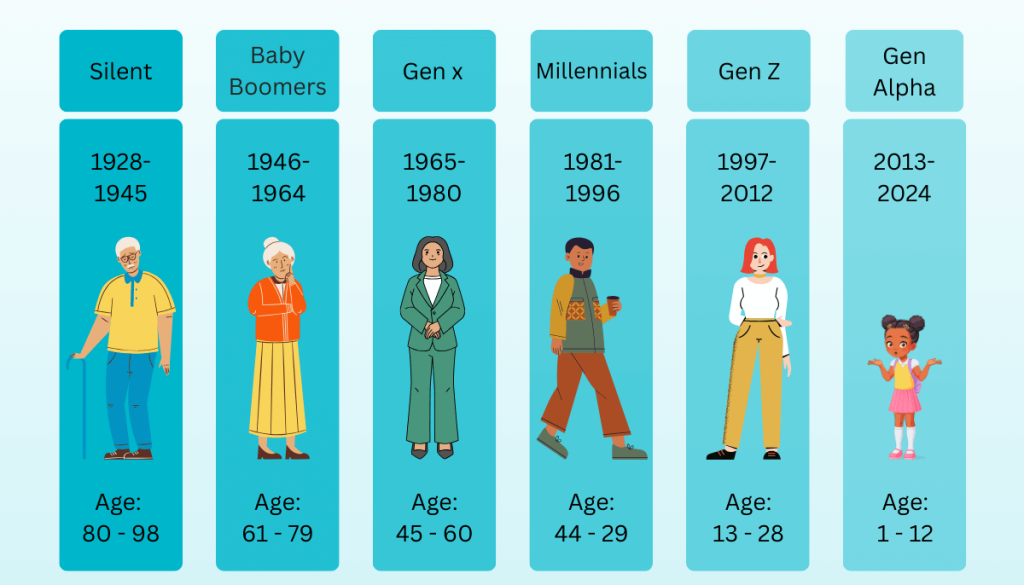
Coaching From A Generational Perspective
Motivating employees and teams requires a solid understanding of emotional intelligence and an awareness of generational needs. We must coach, lead, and develop Gen Z differently than Millennials.
Bridging the Gap: Coaching Across Four Generations
In today’s workplace, a "one-size-fits-all" approach to professional development is a recipe for disengagement. With four distinct generations working side-by-side, leaders must adapt their coaching styles to meet varying expectations for feedback, communication, and growth.
Baby Boomers: Respect and Structure
Boomers (1946 and 1964) often view professional development through the lens of loyalty and experience.
The Approach: They value face-to-face communication and formal, structured programs.
Key Driver: High-level coaching for Boomers should focus on knowledge sharing and mentorship roles, recognizing their decades of expertise while helping them adapt to new digital workflows.
Pro Tip: Avoid "coaching by questioning" if it feels like a test of their competence; instead, frame development as a collaborative exchange of institutional wisdom.
Generation X: Independence and Efficiency
Gen X (1965–1980) grew up as the "latchkey" generation, fostering a deep-seated need for autonomy.
The Approach: They prefer self-directed learning and efficient, straightforward feedback that respects their time.
Key Driver: Coaching should be results-oriented. They often seek external coaching or professional certifications rather than constant handholding from internal managers.
Pro Tip: Give them the objective and the resources, then step back. They value a coach who acts as a sounding board for strategy rather than a directive supervisor.
Millennials: Purpose and Connection
Millennials (1981–1996) have shifted the workplace toward a coaching culture.
The Approach: This group craves frequent, real-time feedback—waiting for an annual review feels like a missed opportunity.
Key Driver: They want to know the "why" behind their work. Coaching must connect their personal growth to a larger organizational purpose.
Pro Tip: Use digital tools for quick check-ins and emphasize work-life integration and soft-skill development.
Generation Z: Personalization and Pragmatism
The newest entrants (1997–2012) are digital natives who see development as a constant, individualized process.
The Approach: They respond best to bite-sized learning (microlearning) and "just-in-time" training delivered via mobile platforms.
Key Driver: Gen Z expects mentorship from day one. They are highly pragmatic and want development that offers clear, actionable pathways for career security and diversity.
Pro Tip: Prioritize authenticity. Gen Z values coaches who are transparent about challenges and supportive of mental health and social responsibility.
The Bottom Line
Effective professional development isn't about changing who people are; it's about meeting them where they are. By blending Boomer’s respect for history with Gen Z’s digital fluency, organizations can create a high-performance environment where every generation feels valued.

Today’s Eclectic Workforce
What’s new on the employment front for 2026?
Early employment trends for 2026 are revealing how shifts in global markets and economies are reshaping expectations. Organizations and individuals are rethinking what matters most and how to achieve the greatest success amid changing workplace climates.
Hybrid Workforce
The hybrid workforce is twofold. Existing employees may work fully remotely or have the option to telework at least a few days a week. The workforce itself has become a hybrid mix of human resources and Artificial Intelligence (AI) contributions.
Benefits
· Promotes work-life balance
· Flexible options for employees
· Reduces traffic congestion, emissions
· AI solves complex problems quickly
Potential Challenges
· Failure to vet AI results
· Overdependency on quick results
· Diminished problem-solving abilities
Skills-Based Hiring
Recruiters and leaders in Human Resources continue to search for candidates based on proven abilities, demonstrated skills, and life experiences. This ongoing trend fills vacancies based on capacity and aptitude rather than requiring specific education credentials that may only yield a theoretical understanding of relevant concepts. Psychometric assessments like DiSC can improve the onboarding process.
Benefits
· Broader candidate pool
· Diminished biases
· Reduced learning curve
Potential Challenges
· Higher organizational learning curve
· Limited understanding of workplace dynamics
· Difficult selection without standardized techniques
Adaptable Leadership
Organizations and governmental departments must be willing and able to adapt to recognize opportunities and overcome challenges. Stagnant or stubborn leadership paralyzes a team, rendering them helpless against unexpected change. The resulting workforce is ill-equipped to manage conflict, pivot to meet customer needs, or respond to the demands of a new market. Adaptable leaders understand what it takes to motivate a team and are willing to engage in continual learning activities like workplace personality assessments and executive coaching.
Benefits
· Opportunities for professional development
· Tools to increase productivity and effectiveness
· Rewards for engagement
Potential Challenges
· Lack of awareness in leadership
· Inability to influence change
· Limited resources for effective tools
Entrepreneurial Growth
Small businesses have flourished since the pandemic and that growth pattern has extended into 2026. Millennials and younger generations are frequently dissatisfied with the traditional workplace structure and prefer autonomy over a decades long career with one organization.
Benefits
· Creative thought and innovation
· New business opportunities
· Flexibility and autonomy
Potential Challenges
· Barriers to entry
· Risk of ownership
· Market interest and response
As the year moves into the second quarter, these trends will further develop and indicate signs of success and opportunities for improvement. Now more than ever, it is critical to get the right employees in the right seats within the right organizations.

Redefine Success
It All Begins Here
Confidence doesn’t always arrive with a bold entrance. Sometimes, it builds quietly, step by step, as we show up for ourselves day after day. It grows when we choose to try, even when we’re unsure of the outcome. Every time you take action despite self-doubt, you reinforce the belief that you’re capable. Confidence isn’t about having all the answers — it’s about trusting that you can figure it out along the way.
The key to making things happen isn’t waiting for the perfect moment; it’s starting with what you have, where you are. Big goals can feel overwhelming when viewed all at once, but momentum builds through small, consistent action. Whether you’re working toward a personal milestone or a professional dream, progress comes from showing up — not perfectly, but persistently. Action creates clarity, and over time, those steps forward add up to something real.
You don’t need to be fearless to reach your goals, you just need to be willing. Willing to try, willing to learn, and willing to believe that you’re capable of more than you know. The road may not always be smooth, but growth rarely is. What matters most is that you keep going, keep learning, and keep believing in the version of yourself you’re becoming.

Small Steps Create Big Shifts
It All Begins Here
Confidence doesn’t always arrive with a bold entrance. Sometimes, it builds quietly, step by step, as we show up for ourselves day after day. It grows when we choose to try, even when we’re unsure of the outcome. Every time you take action despite self-doubt, you reinforce the belief that you’re capable. Confidence isn’t about having all the answers — it’s about trusting that you can figure it out along the way.
The key to making things happen isn’t waiting for the perfect moment; it’s starting with what you have, where you are. Big goals can feel overwhelming when viewed all at once, but momentum builds through small, consistent action. Whether you’re working toward a personal milestone or a professional dream, progress comes from showing up — not perfectly, but persistently. Action creates clarity, and over time, those steps forward add up to something real.
You don’t need to be fearless to reach your goals, you just need to be willing. Willing to try, willing to learn, and willing to believe that you’re capable of more than you know. The road may not always be smooth, but growth rarely is. What matters most is that you keep going, keep learning, and keep believing in the version of yourself you’re becoming.

Turn Intention Into Action
It All Begins Here
Confidence doesn’t always arrive with a bold entrance. Sometimes, it builds quietly, step by step, as we show up for ourselves day after day. It grows when we choose to try, even when we’re unsure of the outcome. Every time you take action despite self-doubt, you reinforce the belief that you’re capable. Confidence isn’t about having all the answers — it’s about trusting that you can figure it out along the way.
The key to making things happen isn’t waiting for the perfect moment; it’s starting with what you have, where you are. Big goals can feel overwhelming when viewed all at once, but momentum builds through small, consistent action. Whether you’re working toward a personal milestone or a professional dream, progress comes from showing up — not perfectly, but persistently. Action creates clarity, and over time, those steps forward add up to something real.
You don’t need to be fearless to reach your goals, you just need to be willing. Willing to try, willing to learn, and willing to believe that you’re capable of more than you know. The road may not always be smooth, but growth rarely is. What matters most is that you keep going, keep learning, and keep believing in the version of yourself you’re becoming.

Make Room for Growth
It All Begins Here
Confidence doesn’t always arrive with a bold entrance. Sometimes, it builds quietly, step by step, as we show up for ourselves day after day. It grows when we choose to try, even when we’re unsure of the outcome. Every time you take action despite self-doubt, you reinforce the belief that you’re capable. Confidence isn’t about having all the answers — it’s about trusting that you can figure it out along the way.
The key to making things happen isn’t waiting for the perfect moment; it’s starting with what you have, where you are. Big goals can feel overwhelming when viewed all at once, but momentum builds through small, consistent action. Whether you’re working toward a personal milestone or a professional dream, progress comes from showing up — not perfectly, but persistently. Action creates clarity, and over time, those steps forward add up to something real.
You don’t need to be fearless to reach your goals, you just need to be willing. Willing to try, willing to learn, and willing to believe that you’re capable of more than you know. The road may not always be smooth, but growth rarely is. What matters most is that you keep going, keep learning, and keep believing in the version of yourself you’re becoming.